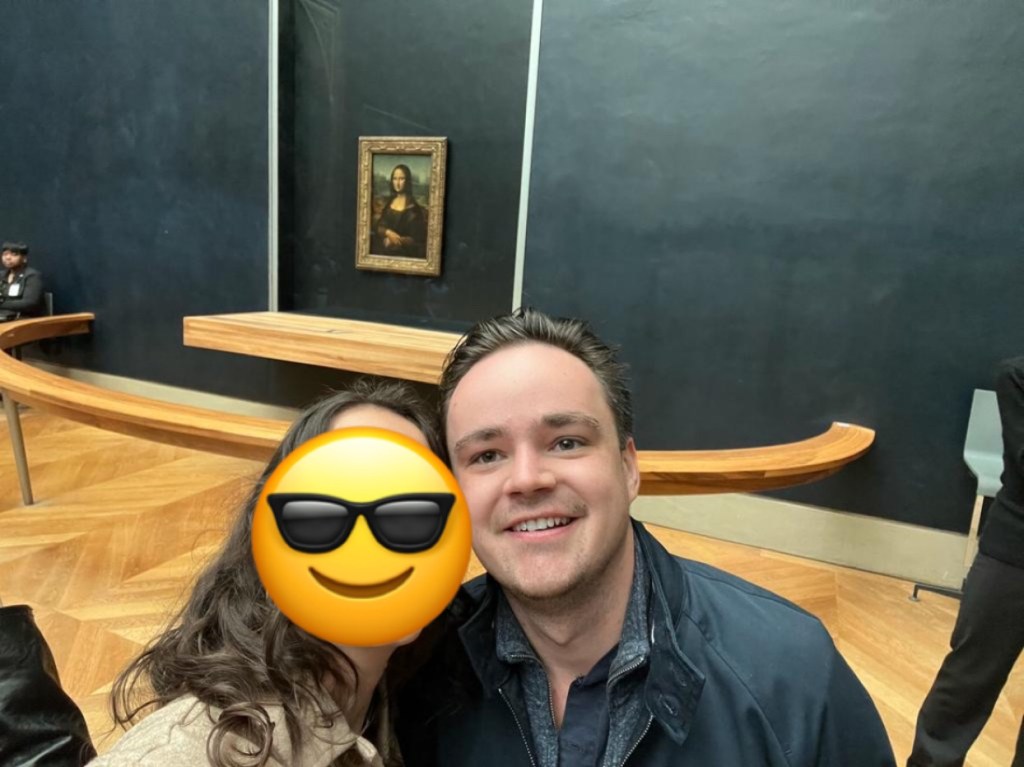
Earlier this year I was able to take a trip to Paris with my girlfriend. While we were drawing up the itinerary, I had a visit to the Louvre at the top of my list. Paris, the City of Light, is replete with iconic landmarks and a rich tapestry of history. My fervor to visit this monumental museum was kindled after devouring Walter Isaacson’s biography on Leonardo da Vinci (highly recommend).
Isaacson’s rendition of da Vinci’s life paints a vivid tableau of a man who was not just a painter but a polymath who merged art with science. This blend of art and science is a continuous theme throughout all of Isaacson’s biographies about those that change our world for the better. The enthralling narrative compelled me to witness firsthand the masterpieces of a man who was centuries ahead of his time. And where better to embark on this journey than The Louvre, home to the legendary ‘Mona Lisa’?
Stepping into Paris and speaking of The Louvre without mentioning its sheer scale and grandiosity would certainly be an oversight. Its expanse is not only geographical but also historical, cultural, and intellectual. Let’s delve into some numbers. The Louvre is sprawled over a staggering 782,910 square feet of exhibition space, making it the world’s largest art museum. With more than 380,000 objects and 35,000 works of art spread across eight departments, it’s a testament to the evolution of human artistry and innovation over millennia.
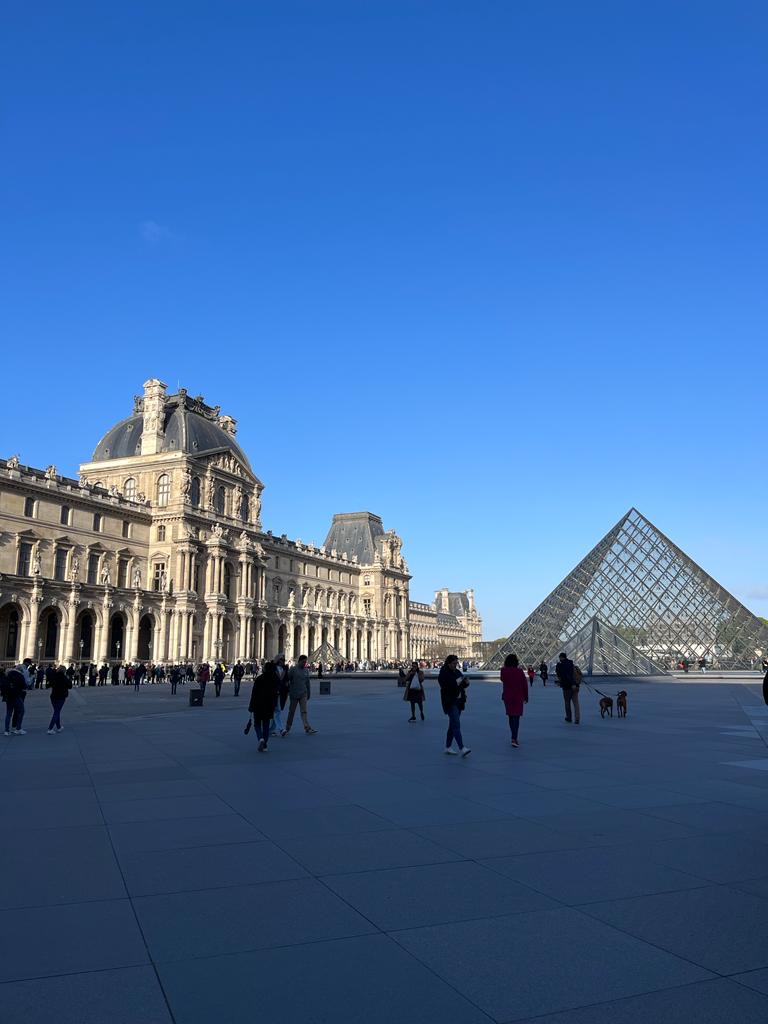
Now, imagine trying to take in this vast collection in one go. Hypothetically, if one were to spend just a mere 60 seconds admiring each art piece, and if we only count the displayed 35,000 works, it would take (by some estimates) 65 days of non-stop viewing to see everything! And that’s without the much-needed coffee breaks, contemplative pauses, or time to read the descriptions!
Many visitors often wonder about how long they should allocate to explore the museum. While a few hours can cover the iconic highlights, a more thorough exploration can span days. Some art enthusiasts even make multiple visits, dedicating each day to a specific department or era. Such enormity might seem overwhelming, but it’s also what makes The Louvre a timeless attraction.
While my girlfriend has visited before, I had not. Besides seeing the Mona Lisa, I wasn’t sure where to even start. In my view, this is the perfect activity to leverage GPT-4. It’s a complex activity with many routes to choose from and attractions to see. Plus, it’s been blogged, tweeted, posted, and discussed openly on the internet for all AI models to ingest.
I turned to GPT-4 for a guide through the Louvre and it produced an excellent plan:
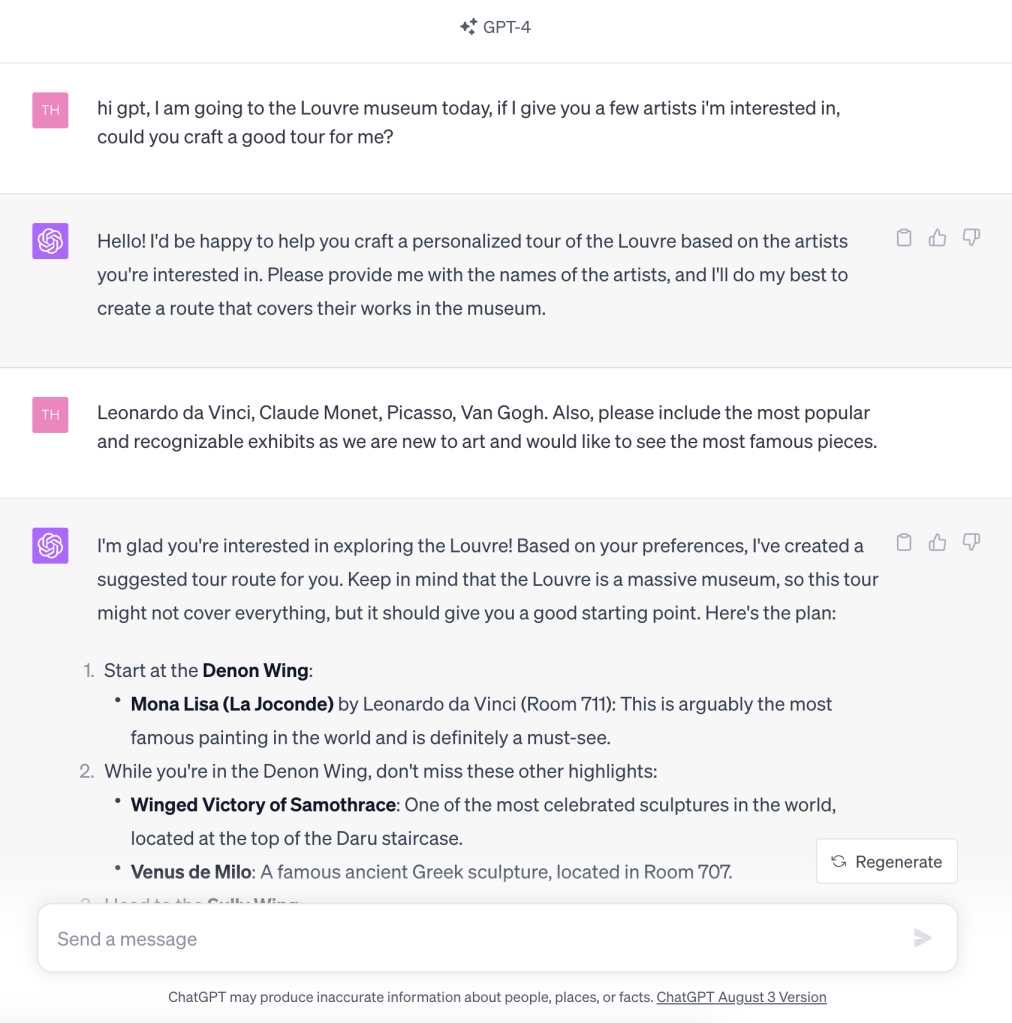
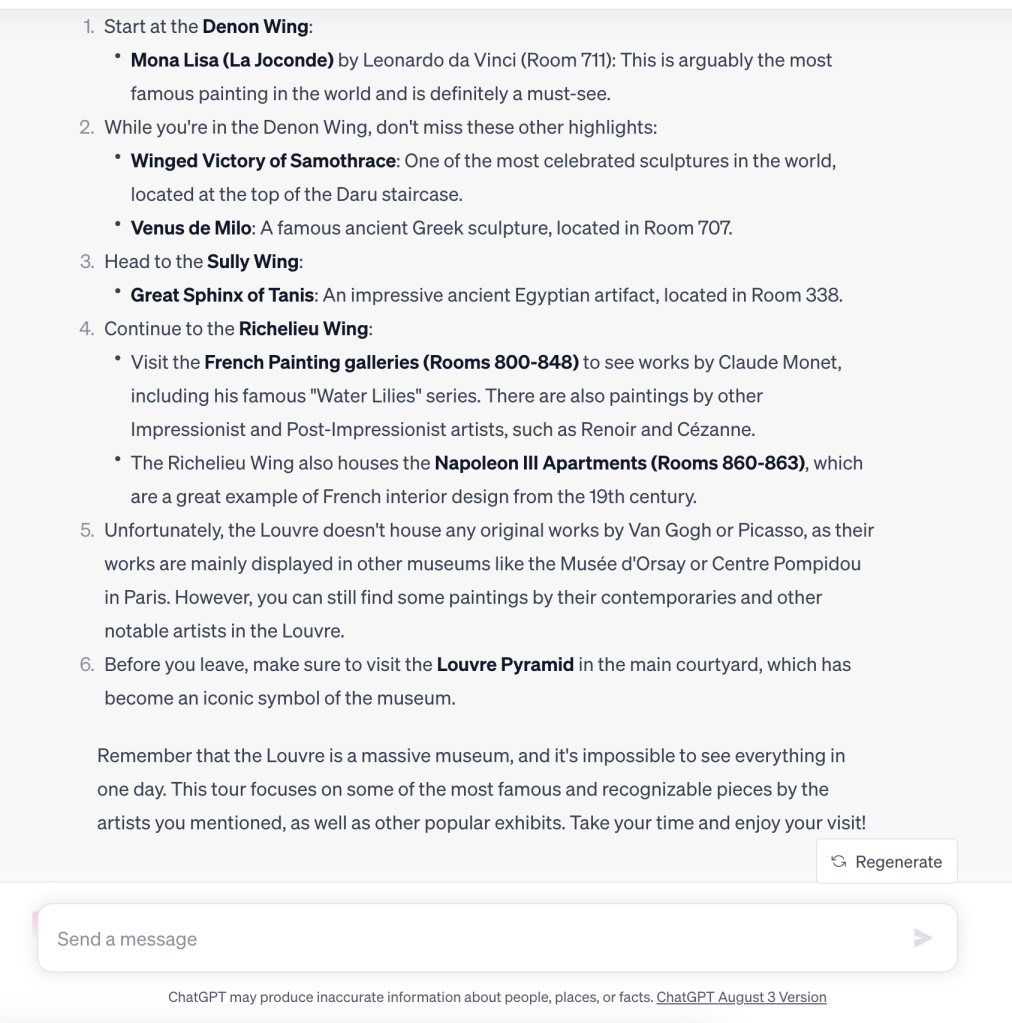
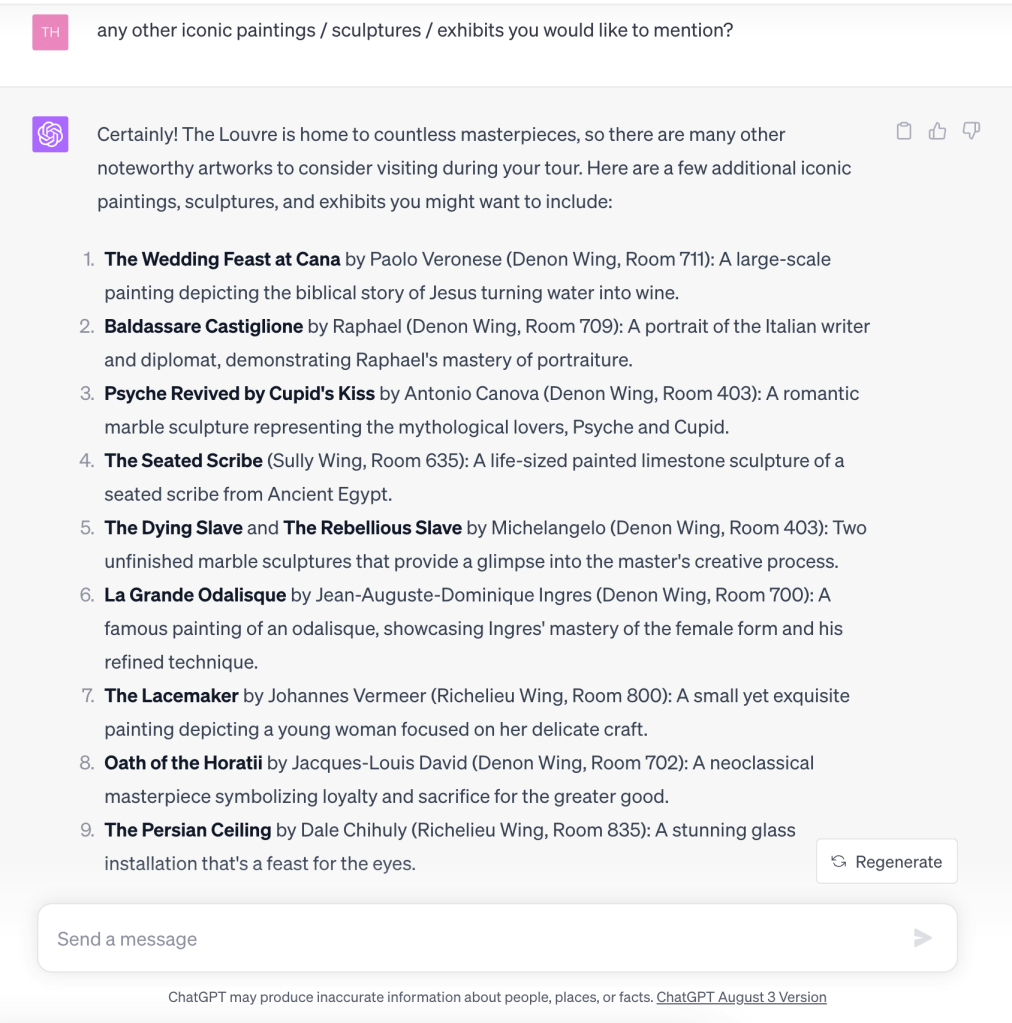
But it’s not just da Vinci that beckons. The Louvre, originally a royal palace, spans a vast expanse and is a treasure trove of art, culture, and history. From the ancient Greek ‘Venus de Milo’ to the Egyptian antiquities, every corner narrates tales of eras gone by. This museum is not just a building; it’s a testament to humanity’s enduring love for creation and the arts.
Beyond its vast collection, the Louvre itself is a masterpiece. Its grandeur is epitomized by the modern Louvre Pyramid juxtaposed against the historic palace, symbolizing the seamless melding of the old with the new.
Very fun trip and it was all made extremely easy thanks to GPT-4.

 mike murphy