Over the past year, we have witnessed an explosion of LLM product releases. OpenAI is led by GPT-4 having over 175 billion parameters trained on massive datasets of text and code. It can generate text, translate languages, and answer various types of questions in informative ways. Meta has launched Llama with similar capabilities. Cohere is an LLM also trained on various datasets of text and code with a similar looking user interface.
When OpenAI launched GPT-3 in late 2022, many speculated this could be the beginning of the end for Google search. Launched in 1996 by Larry Page and Sergey Brin as a research project at Stanford, “Google” has become so intertwined with our daily lives it’s now commonly used as a verb. The first google search was answered in September of 1998 and we now see over 8.5 billion searches per day worldwide. Diving head-first into the leading narratives of the time many VCs speculated the rise of LLM chat interfaces are eventually going to crush Google search volume. While GPT has incredible value that we are still all unpacking, it has not yet made a dent in Google search volume. Not to be left behind the competition, Google has launched their own front-end via Bard in March 2023. Seen by all as a direct competitor to GPT-4, many speculated Google was forced to launch Bard after web-crawling was publicly released on OpenAI’s new model.
As an incumbent in any industry the leader is often presented with hard decisions to make regarding new innovations that may or may not come at the cost of their existing businesses. One school of thought says the incumbent should ignore these developing technologies and continue to emphasize the current advantage it has in the marketplace. Others argue that the incumbent must incorporate the new technology – or die. Google has chosen the latter bit, in incredibly smart fashion. Google search makes revenue by selling ads. Mixed in with the links that are most likely what your search queue is looking for are paid ads by companies trying to put a product in front of consumers. I’d argue this has resulted in the single greatest business model of all time and in 2022 it generated $162 billion in revenue for Google. That’s billion with a B. The risk to Google search is if consumers one day decide to stop Googling for answers and instead turn to LLMs that often provide context that would usually require visiting a few different links if they chose the traditional search methods. Thus consumers would click on fewer Google ads and revenue per click would suddenly become less valuable. This all assumes Google doesn’t find a way to integrate their newly launched AI tools into an already existing business model relying on clicks for revenue.
Instead of simply providing a Bard LLM interface, Google Labs recently launched Generative AI into their everyday search.
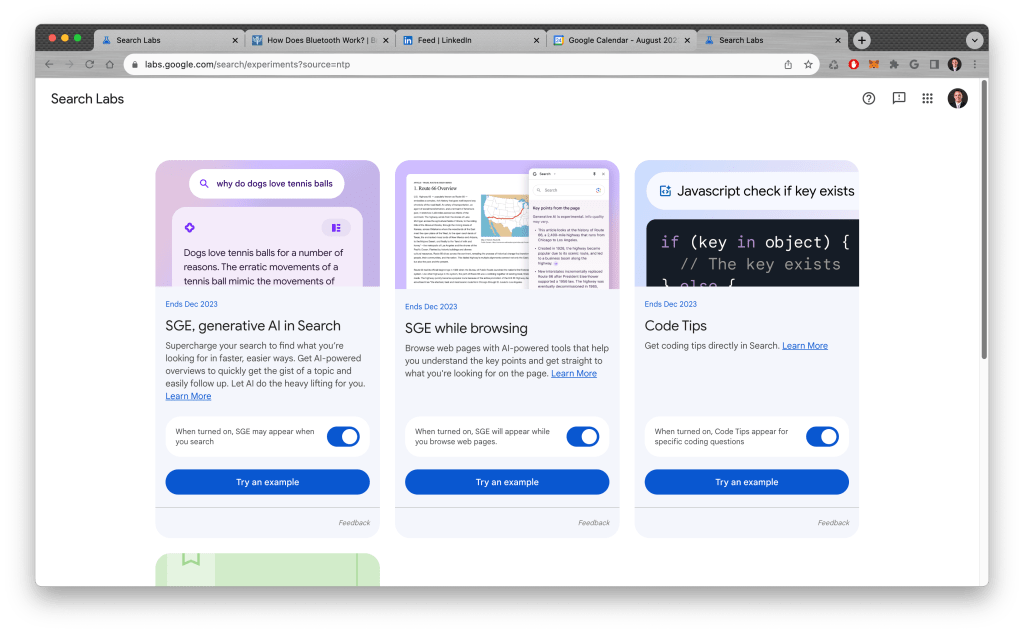
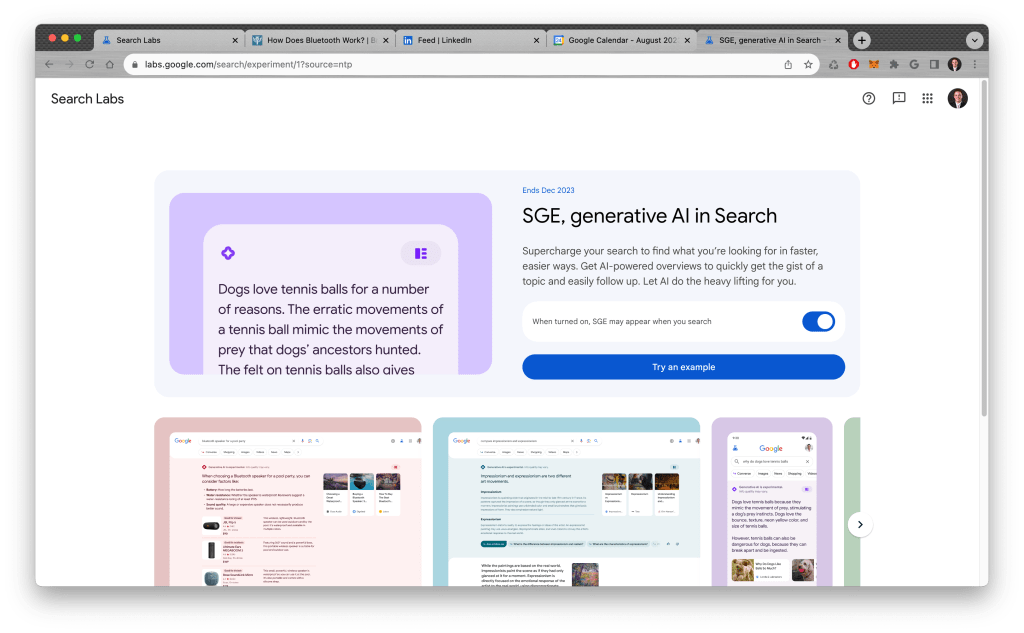
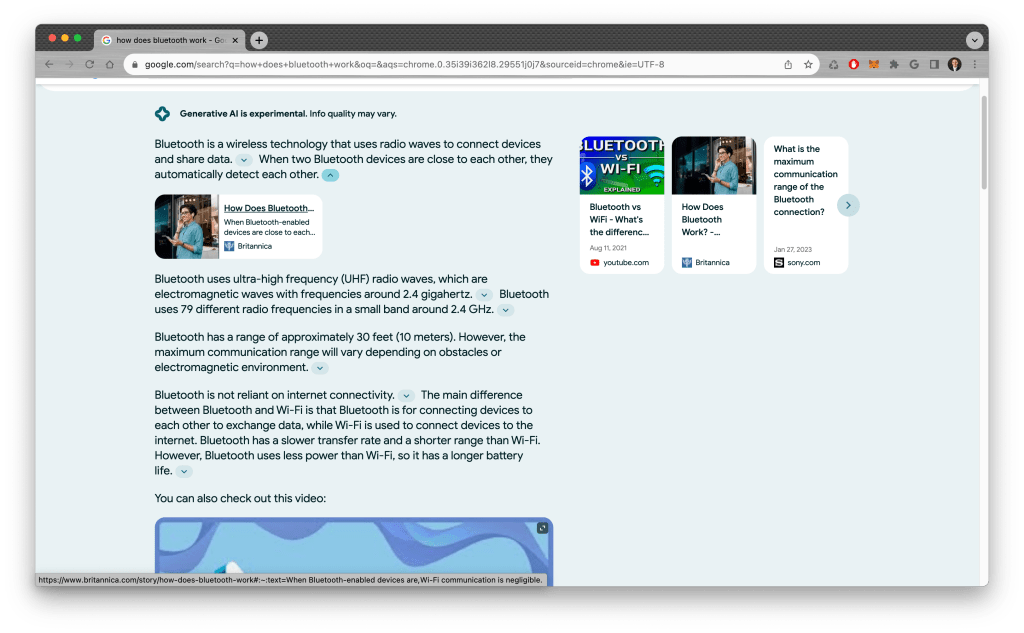
While still in beta mode, it is wildly effective in providing more detailed context than other LLMs I have used. When Googling any query that the Generative AI identifies can be answered with a quick synopsis, a short summary is provided right below the search bar for users. For example purposes, I typed into the Google search bar “How does Bluetooth work?”:
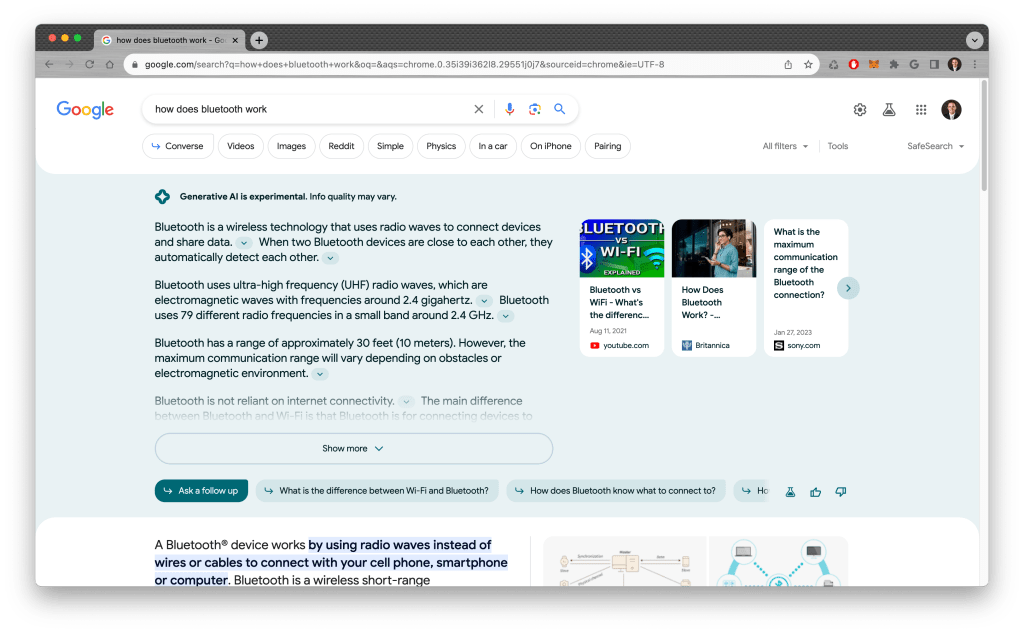
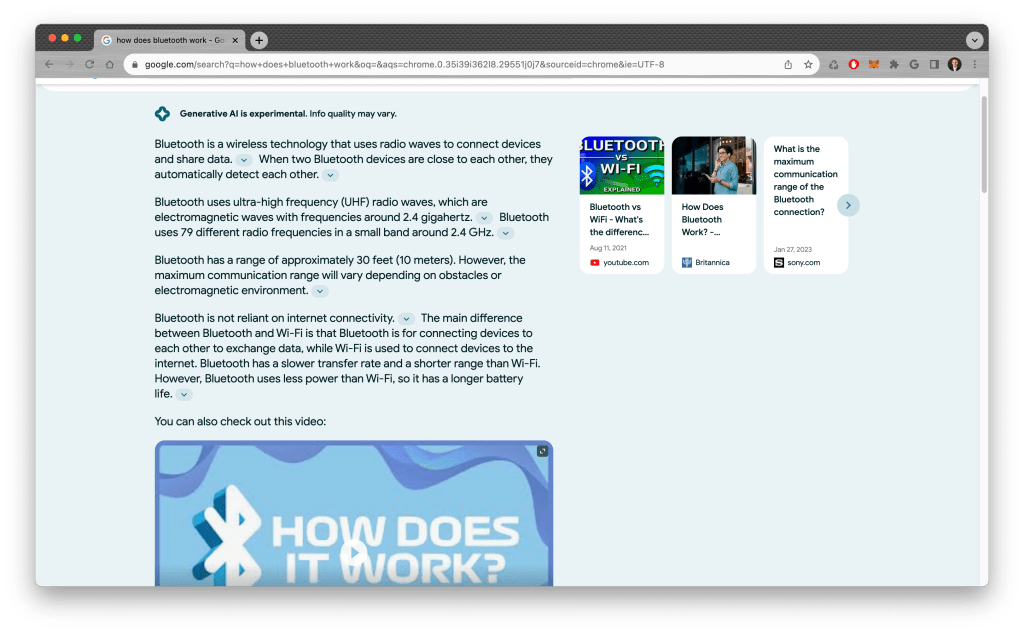
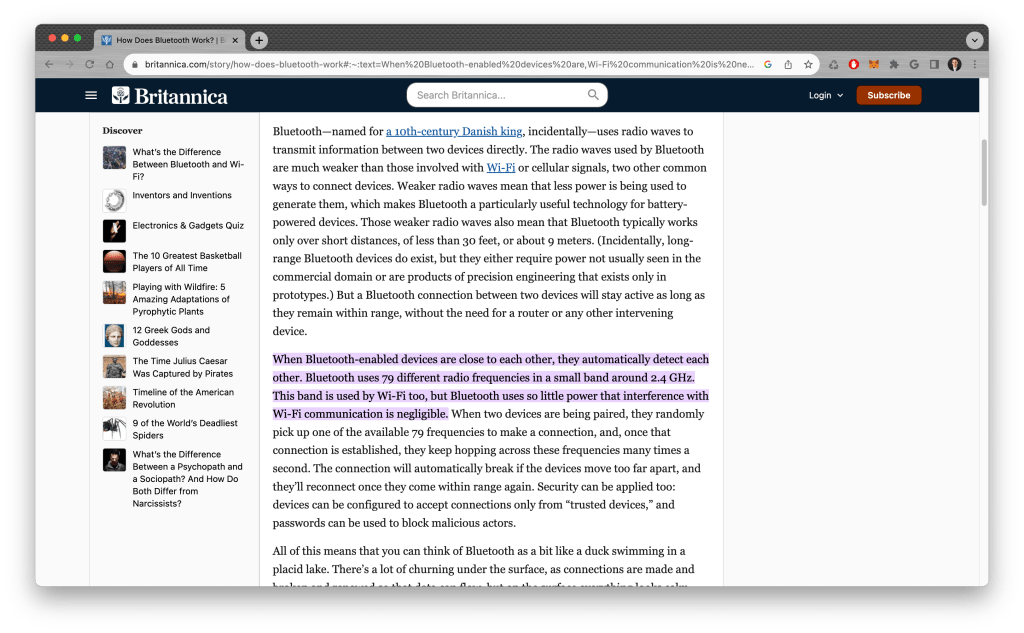
In addition to the standard Google links, I was provided the above written summary of context. Each individual datapoint (importantly) has a drop down that, when clicked, provides a link to the original source documentation of where the information was scraped from. This is beneficial for both sides. From Google’s standpoint, the add click revenue is not going away any time soon. The consumer, on the other hand, is provided confidence that each answer being provided is accurate and actionable information. In classic Google fashion, no stone is left unturned and after clicking a source link the page automatically loads directly to a highlighted portion of the page where the information comes from:
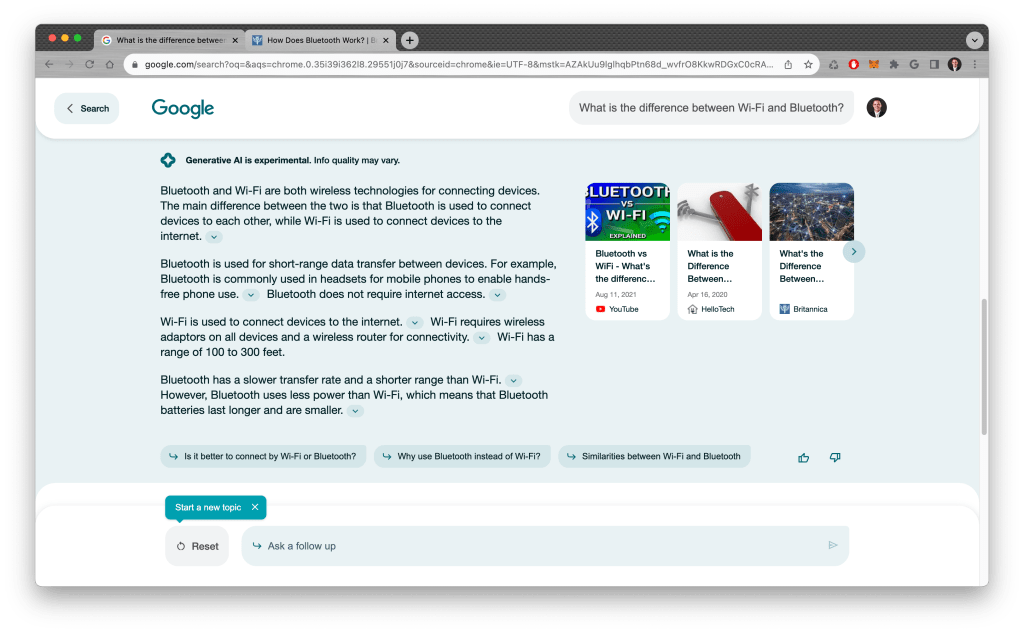
Another great feature are the suggested questions provided on the bottom of the AI response. Clicking on one of the suggested questions turns your Google search page into more of a back and forth with the AI interface. As you can see instead of the normal Google search page we now are able to “Ask a follow up” – presumably to the Generative AI directly.
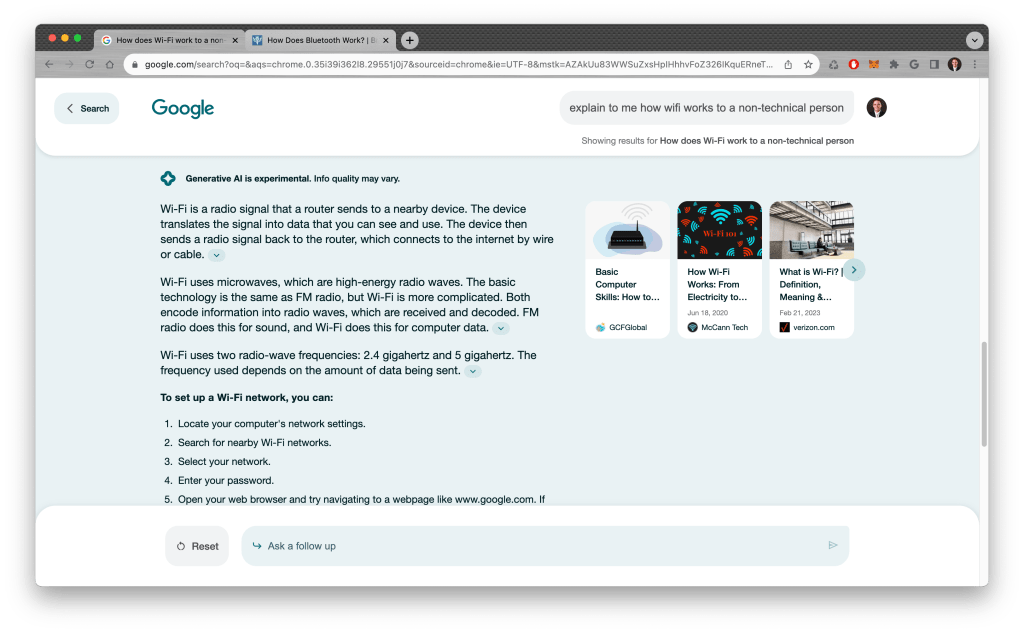
I then decided to ask a follow up being “Explain to me how AI works as a non-technical person”:
Ultimately, the generative AI integration into Google search is seamless from a user perspective thus far. Instead of shying away from a product that could upset its prized golden goose of revenue Google is taking the issue head on. The advertising click revenue space is a volume game. To convince the mass market consumer (like my parents in their late-50s) to switch from Googling for an answer to using a chatbot from a company they have never heard of is a Herculean task. Adding to the protective moat is Generative AI integration that provides the same value as competitors for most of our general day-to-day tasks. All in all, Google search isn’t going anywhere. I highly recommend signing up for access to the Google Labs AI integration into your next Google search.

 mike murphy